越狱第四季
"China Cool" appeals to international tourists in more ways than one_我的网站

一 |
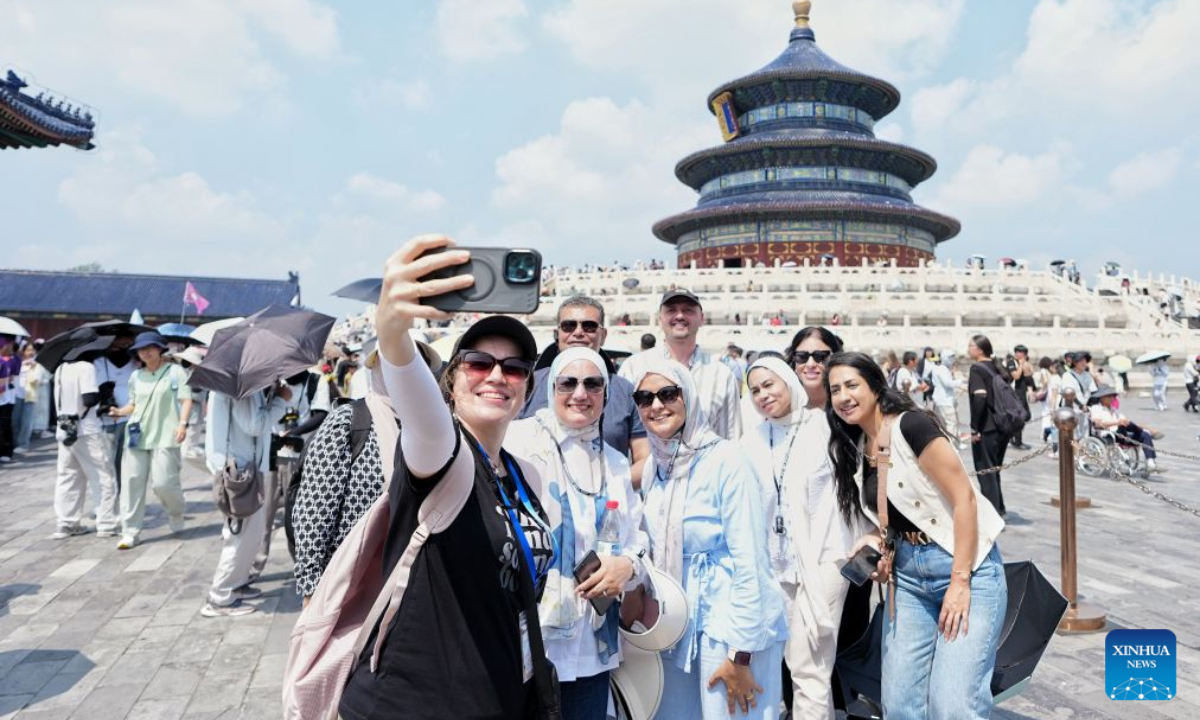
Tourists from Egypt take selfies in front of the Hall of Prayer for Good Harvests at the Temple of Heaven Park in Beijing, capital of China, July 28, 2026. Thanks to the visa-free entry policies, China has witnessed an increasing number of foreign tourists visiting China this summer. According to the official data, 77.7 percent of foreign visitors entering China in the first half of the year enjoyed visa-free entry policies. (Xinhua/Ju Huanzong)
"I've come to nature's air conditioner."
That was the reaction of a Spanish tourist visiting southwest China's Yunnan Province this summer. Before arriving, he had been enduring temperatures of around 40 degrees Celsius. But when his flight landed in Kunming and he stepped out into the breeze, the relief was immediate. His trip in search of cooler weather had proved well worth it.
This summer, as heat waves swept across many parts of the world, an increasing number of foreign tourists are heading to China to escape the heat.
In places such as Zhangjiajie in central China's Hunan Province, where mountain scenery creates a natural cooling effect, and the water town in "Jiangnan," the scenic region south of the Yangtze River, where visitors can enjoy the slower pace of life by the canals, cool weather has become part of the travel experience itself. Local specialties and products that help people beat the heat add to the appeal.
But the "cool" in "China Cool" goes beyond the weather. It also comes from the variety of experiences available to visitors. They can listen to the bells of an ancient temple at dawn, learn traditional crafts from artisans, take a high-speed train to another city, or simply order a late-night meal with a few taps on a smartphone. Such everyday experiences showcase China where tradition, convenience and modern life coexist.
That sense of "cool" is even more striking when it comes to technology. Visitors can explore smart factories, try AI glasses with real-time translation, interact with robots, and take autonomous vehicles. For many foreign visitors, these experiences offer a glimpse of China's high-tech future and add a new dimension to the country's image beyond its traditional landmarks.
The growing number of international visitors has also been facilitated by China's efforts to make travel more convenient. According to the National Immigration Administration, China received 22.91 million inbound foreign visitors in the first half of 2026, up 20.4 percent year on year. Visa-free entries accounted for 77.7 percent of this total.
As more visitors arrive and experience the country firsthand, the way China is talked about overseas is also evolving. Phrases such as "China Travel," "Becoming Chinese" and "Chinamaxxing" have gained attention on overseas social media, while "China Cool" offers a new way to capture the broader appeal of these experiences, reflecting interest in China that is no longer experienced only through its famous landmarks, but also through its culture, technology, services and everyday life.
For international visitors, China is proving to be cool in more ways than one.
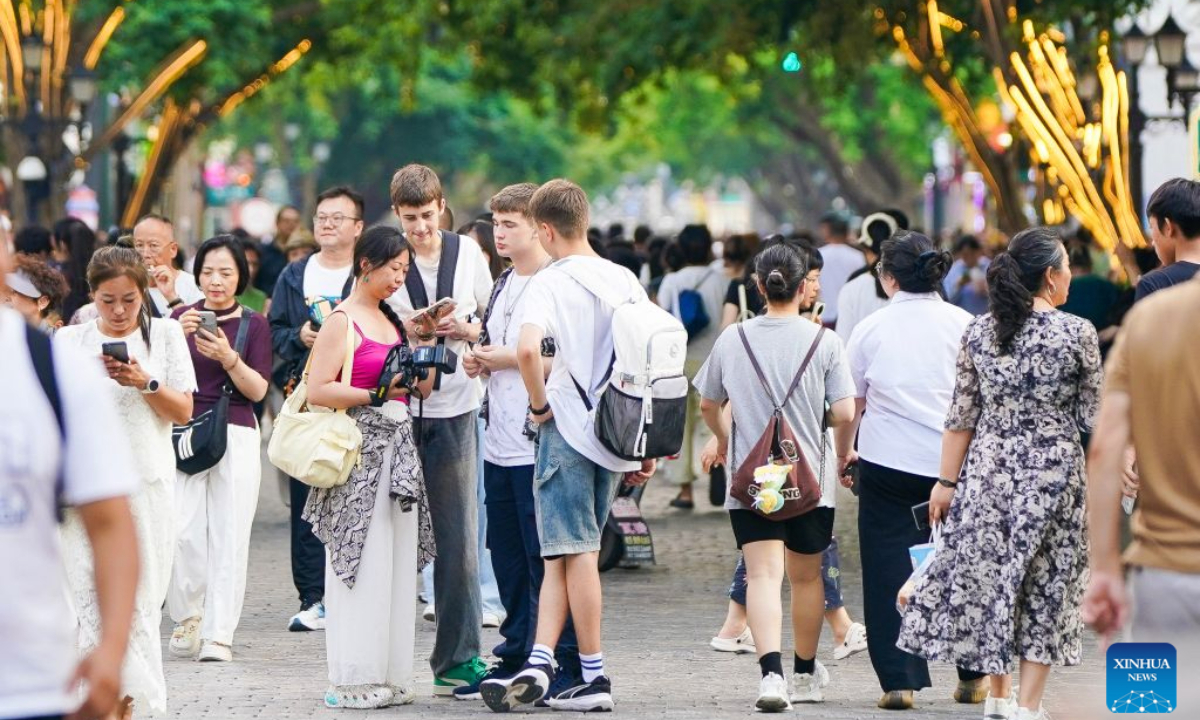
Foreign tourists visit the Central Street in Harbin, northeast China's Heilongjiang Province, July 22, 2026. Thanks to the visa-free entry policies, China has witnessed an increasing number of foreign tourists visiting China this summer. According to the official data, 77.7 percent of foreign visitors entering China in the first half of the year enjoyed visa-free entry policies. (Xinhua/Na Yuqi)

A foreign tourist looks on as local women make Tiaohua cross-stitch embroidery, a traditional handicraft passed down through generations by women of Huayao, a branch of Yao ethnic group, at Huxingshan Yao Township in Longhui County, Shaoyang City, central China's Hunan Province, Aug. 4, 2026. During midsummer, Huxingshan Yao Township embraces a tourism boom thanks to its alpine climate, rich intangible cultural heritage and folk traditions. (Photo by Zeng Yong/Xinhua)
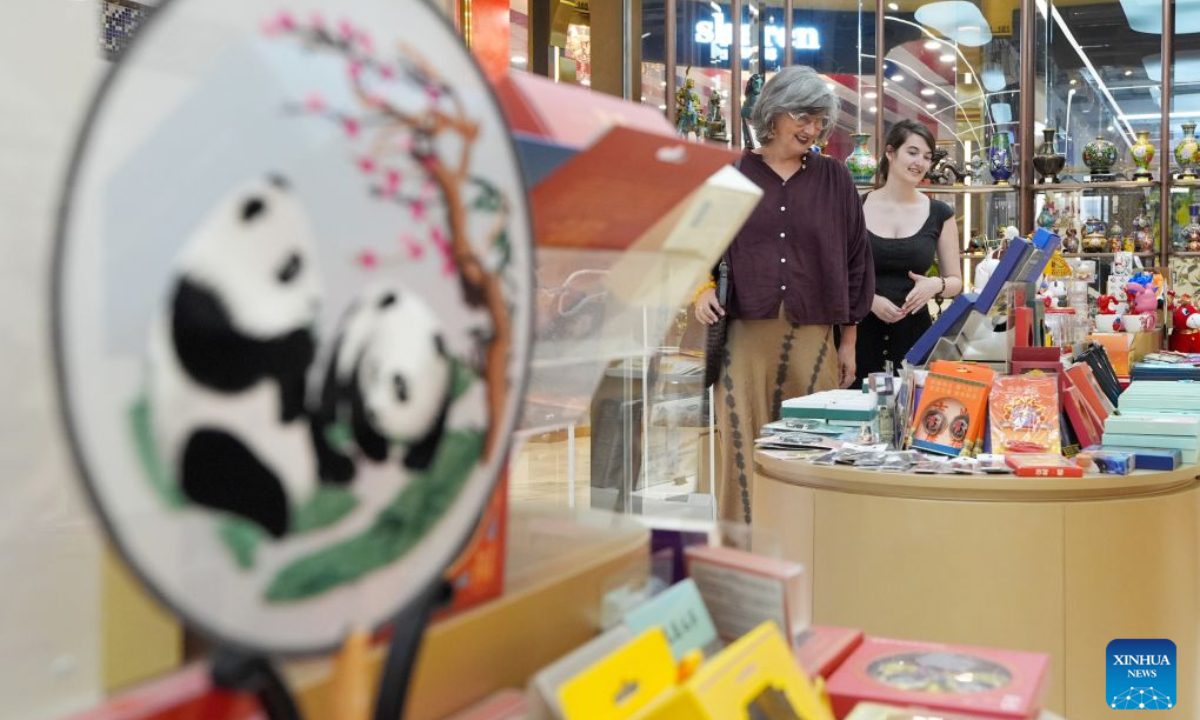
Dutch tourists select souvenirs at the Silk Street building in Beijing, capital of China, June 1, 2026. (Xinhua/Ju Huanzong)
。 8 月 25 日消息,微软昨日(8 月 24 日)发布博文,宣布自 Microsoft Edge 152 版本(计划 8 月 27 日发布)开始,WebView2 Runtime 将跟随 Edge 浏览器的更新节奏,从现有的 4 周一次缩短到每隔 2 周一次。WebView2 Runtime 是微软推出的网页渲染底层运行库,可视为连接“本地客户端软件”和“现代网页技术”的桥梁。它允许开发者将 HTML、CSS 和 JavaScript 等网页内容,直接嵌入到原本的桌面原生应用程序(如 Windows 软件)中。微软表示 WebView2 Runtime 将跟随 Microsoft Edge 浏览器加快更新节奏,将现有每隔 4 周发布一个主要版本缩短到每隔 2 周发布一个主要版本。援引博文介绍,附上微软相关调整安排如下:Microsoft Edge 152 版本(计划 8 月 27 日发布):是 WebView2 Runtime 采用传统更新节奏(每隔 4 周)的最后 1 个主要版本:Microsoft Edge 153 版本(计划 9 月 10 日发布):WebView2 Runtime 首个采用新更新节奏(每隔 2 周)的主要版本。Microsoft Edge 后续版本:WebView2 Runtime 后续将和 Microsoft Edge 浏览器更新同步,每 2 周发布一次更新。微软建议开发者在 Beta 频道 Microsoft Edge 测试 WebView2 应用,在更新推送至 Stable channel(稳定频道)前发现应用兼容性问题。微软还建议开发者借助 WebView2 预览频道,自动验证应用的核心工作流程。开发者可以使用 Microsoft Edge WebDriver 测试应用。

二 |
Current article:http://1l1dpw.cesangrangshunzashuangruijiu.pics/list_kdgai/08ikj18.html
Published on:04:06:21